Vanilla Forward
Barrel aged
Milk chocolate that opens and stays, with a soft vanilla lift on the finish. Holds its shape under milk.
Milk chocolate · Nutty · Vanilla
Normal Day · Blend Programme
We do not sell you a coffee off a list. We build one to your menu — a Thai base grown inside standing forest, joined to an imported lot chosen for what its process does to the cup.
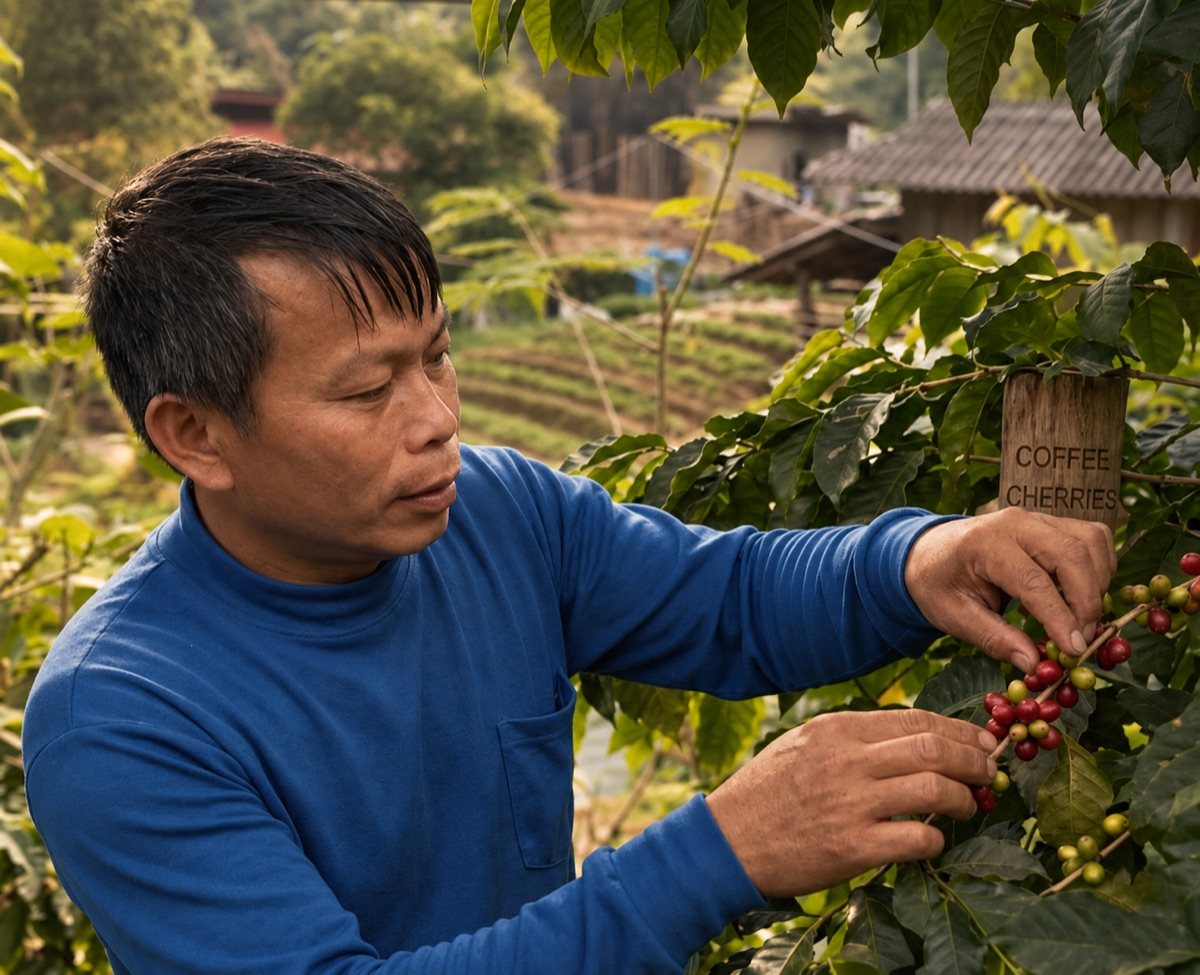
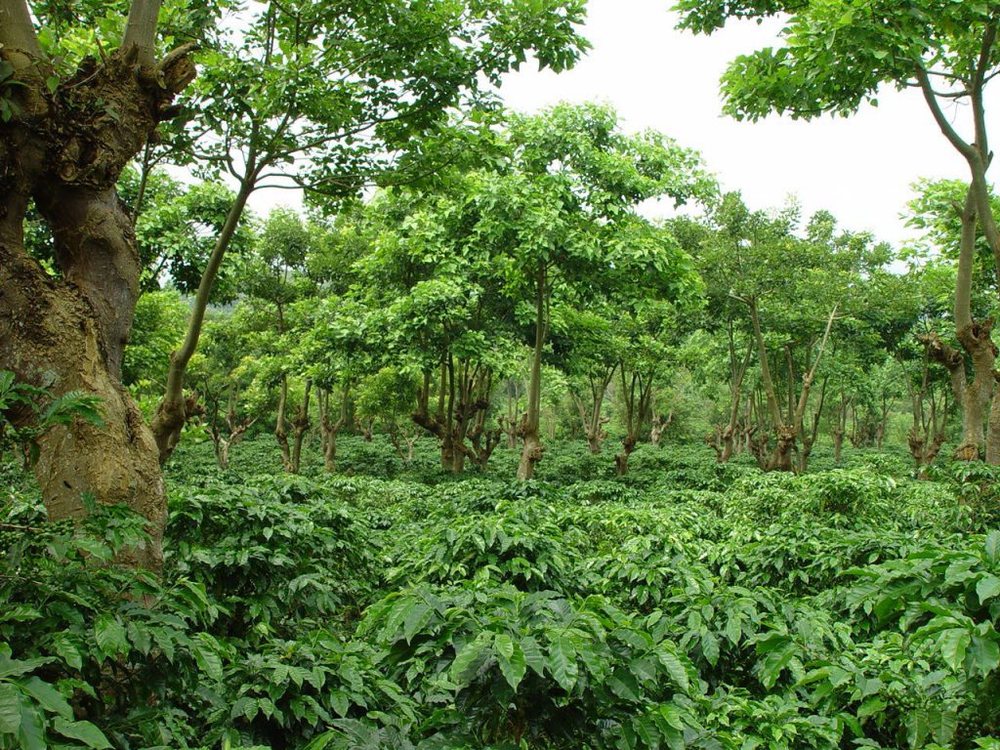
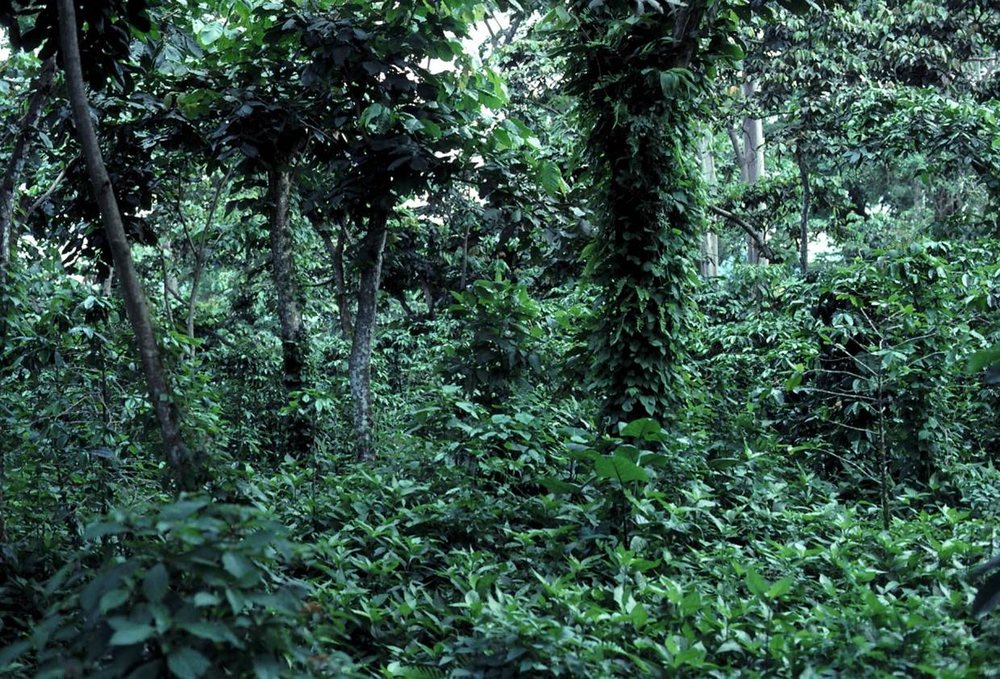
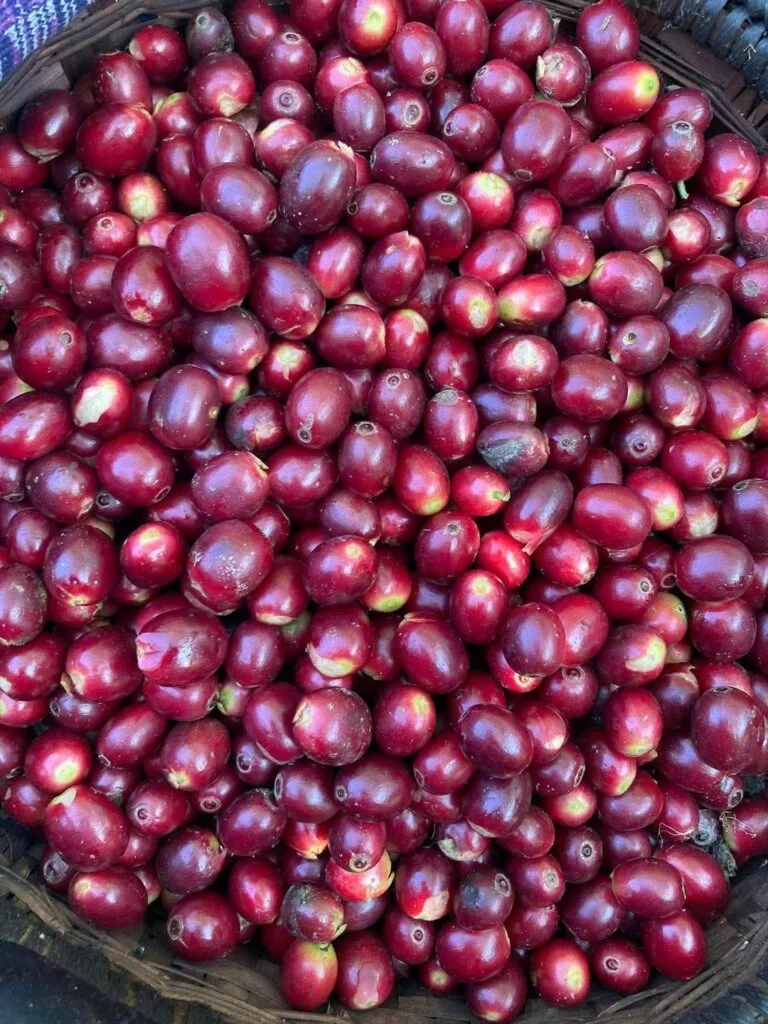
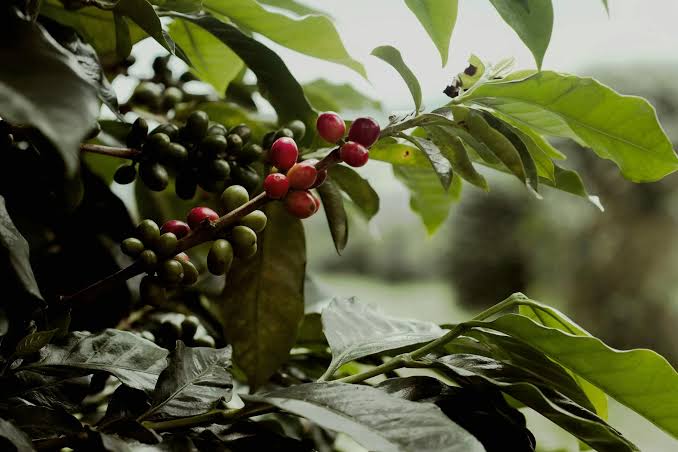
Reference imagery. The first two frames show what shade-grown cultivation looks like; they were not photographed at Mae Hang.
The base
In Mae Hang Luang, high in Chiang Rai, our growing partner returned from the city to the land that raised him. He does not clear forest to plant coffee. He grows it inside the forest — under the canopy of standing trees, alongside wild honey and traditional tea, in one system rather than three plots.
Shade-grown coffee ripens slowly. That is the whole point. Slower maturation builds sugar and structure, and it is why this lot can hold its shape under milk without being roasted dark to compensate.
The harvest is processed, cupped and roasted with the farm rather than around it — shared processing knowledge, honest feedback on every lot, and a price intended to make a standing forest worth more than a cleared one.
Mae Hang is the constant in every blend we build. Deep chocolate, a round body, and balance that never shouts. It is the floor the rest of the cup is built on.
The signature
Foundation is not memory. A cup that is only balanced is forgettable, so every blend carries one imported lot chosen for a process that lifts a single note out and holds it there.
Barrel ageing. Yeast-selected fermentation. Extended anaerobic. Honey and natural processing. We are not buying an origin's reputation — we are buying a specific thing that happens to the cup, and matching it to the note your menu is missing.
Working origins include Honduras, Colombia, Brazil and Ethiopia, alongside Thai lots beyond Mae Hang.
Rainforest Alliance is a programme development goal, with requirements defined across the participating farm and supply chain. Imported lots can be selected to a certification brief, subject to supporting documentation.
The method
This is a programme, not a catalogue. Nothing below is a fixed recipe — the blends that follow are directions we have taken, and any of them can be cut again for your bar.
We sit at your pass or your bar and taste what you already serve. What has to change is decided from your menu, not from our stock list.
Mae Hang is the constant — Thai, forest-grown, structurally reliable. It is the majority of every blend we build.
One imported lot, selected for process rather than origin prestige — whichever carries the note your menu is missing.
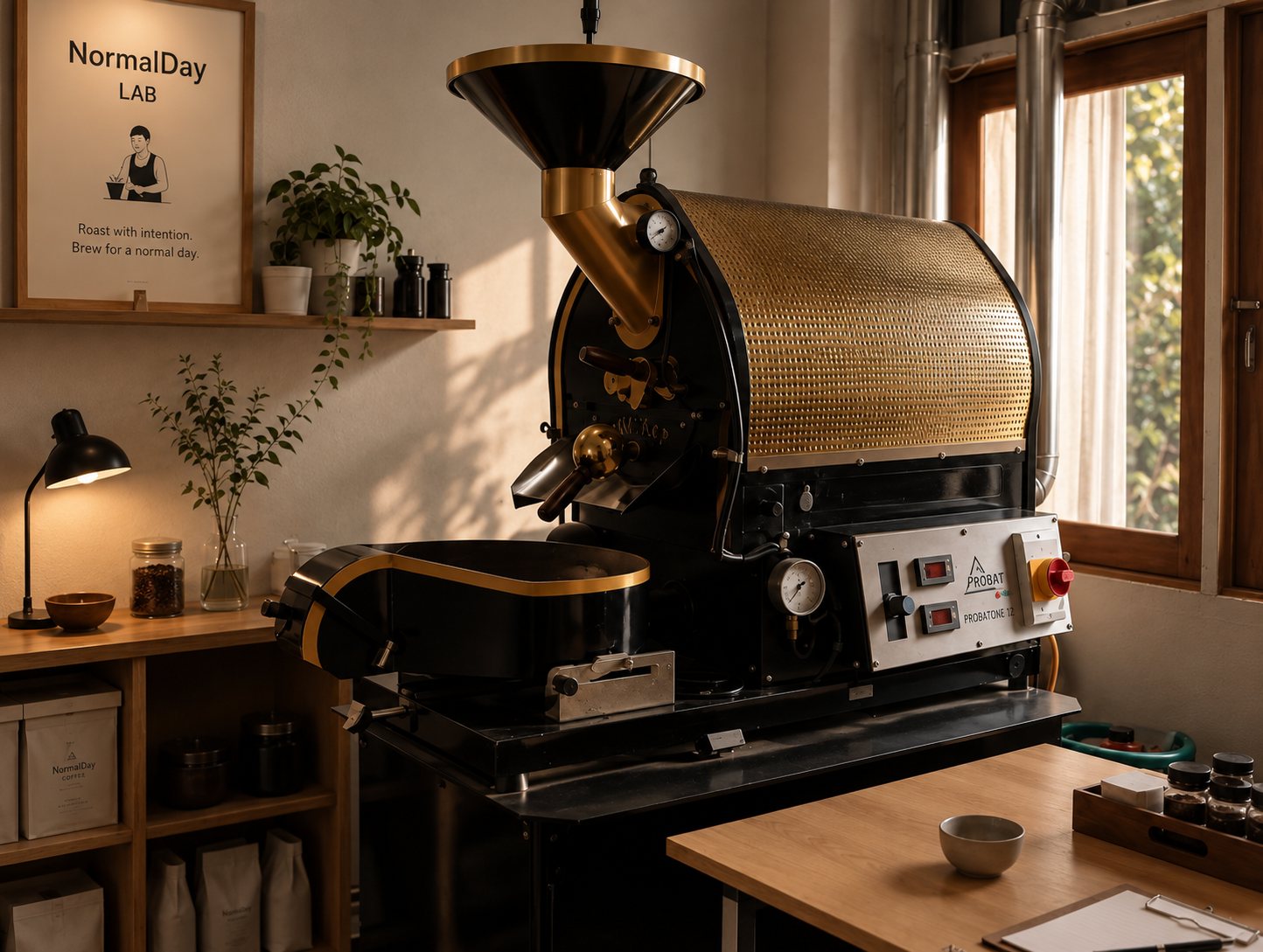
Profiles are cut on a 1 kg batch roaster, so a revision costs one morning rather than a quarter.
You brew it in service and tell us what broke. We recut and send again. Two or three rounds is normal.
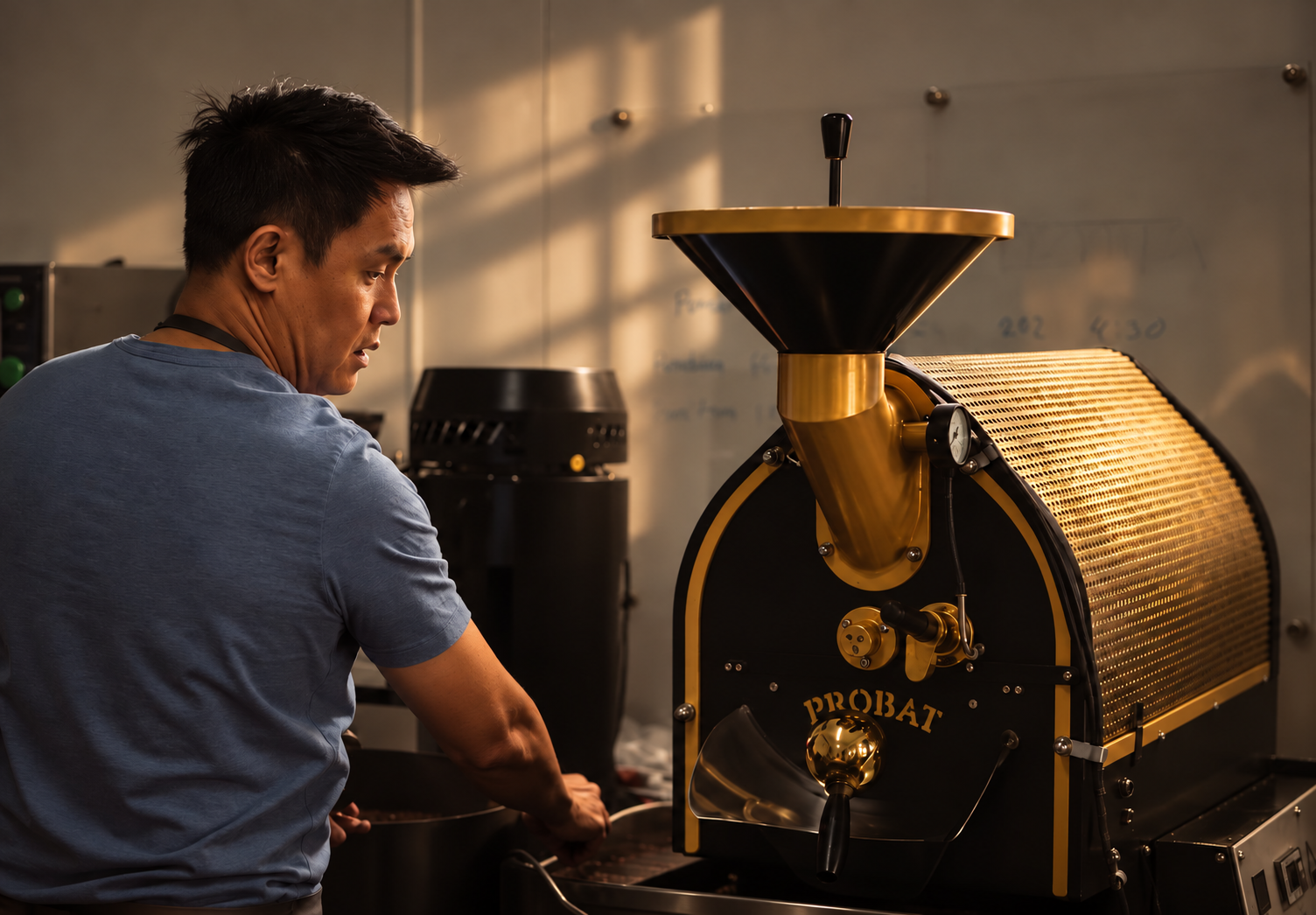
A 1 kg drum is small enough that changing your profile costs one morning and one kilo of green, not a production run. That is the whole reason we can keep revising until the cup is right for your bar — a larger roastery would need you to commit to a quarter of it first.
The range so far
Vanilla Forward and Hazelnut Field are reference blends. The other eight are illustrative directions for development, showing the span the programme can cover — from a dark milk-forward workhorse to a tea-like filter. Yours will be its own entry on this page.
Barrel aged
Milk chocolate that opens and stays, with a soft vanilla lift on the finish. Holds its shape under milk.
Milk chocolate · Nutty · Vanilla
Anaerobic yeast
Toasted hazelnut over a creamy, coconut-sweet body. Clean tropical brightness keeps it from going heavy.
Hazelnut · Coconut · Creamy
Natural, dark
Black cocoa and walnut, very low acidity. Built to follow a heavy course without fighting it.
Black cocoa · Walnut · Molasses
Washed, light
Tea-like and floral, almost weightless. A filter to close a tasting menu where a heavy cup would undo the meal.
Jasmine · White peach · Tea
Washed
Bergamot and honey, bright without being sharp. Breakfast service, black or with a light milk.
Bergamot · Honey · Green apple
Honey process
Red plum and brown sugar with a syrupy weight. Reads sweet before it reads acidic, which most guests prefer.
Red plum · Brown sugar · Syrupy
Natural
Bitter cocoa and roasted almond, built for volume milk service. Cuts through oat and soy without disappearing.
Bitter cocoa · Almond · Malt
Extended anaerobic
Mango and passionfruit, wine-like and loud. A signature pour, or the base of a coffee cocktail.
Mango · Passionfruit · Wine-like
Thai lots only
An all-Thai build. Palm sugar and toasted coconut — designed to sit beside Thai desserts rather than compete with them.
Palm sugar · Coconut · Sesame
The workhorse
Chocolate and caramel, balanced, forgiving of a busy bar. Where most venues start before we sharpen it.
Chocolate · Caramel · Almond
Every profile above is available as filter and espresso, and every one can be moved — lighter, darker, sweeter, cleaner — for your bar. That is the service. The list is only evidence that we can do it.
Sourcing & practice
| Base | Forest-shade smallholder — Mae Hang Luang, Chiang Rai |
|---|---|
| Cultivation | Grown inside standing forest; coffee, wild honey and tea in one system |
| Base certification | Certification pathway agreed per programme; documents verified per lot |
| Imported lots | Honduras · Colombia · Brazil · Ethiopia — selected to the cup and certification brief |
| Roasting | Roasted to order in Bangkok — 1 kg batches, Probat Probatino |
| Roast policy | Cut per venue; revised on your feedback, not on our schedule |
| Supply unit | 1 kg kraft bag — uncoated, hand-stamped label. 250 g available for retail and gifting |
We would rather you read this here than find it later.
The project behind the cup
We were built on one idea: the best coffee in this country is already here. It does not need replacing with something flown in — it needs someone to design it properly and put it in front of people who can judge it.
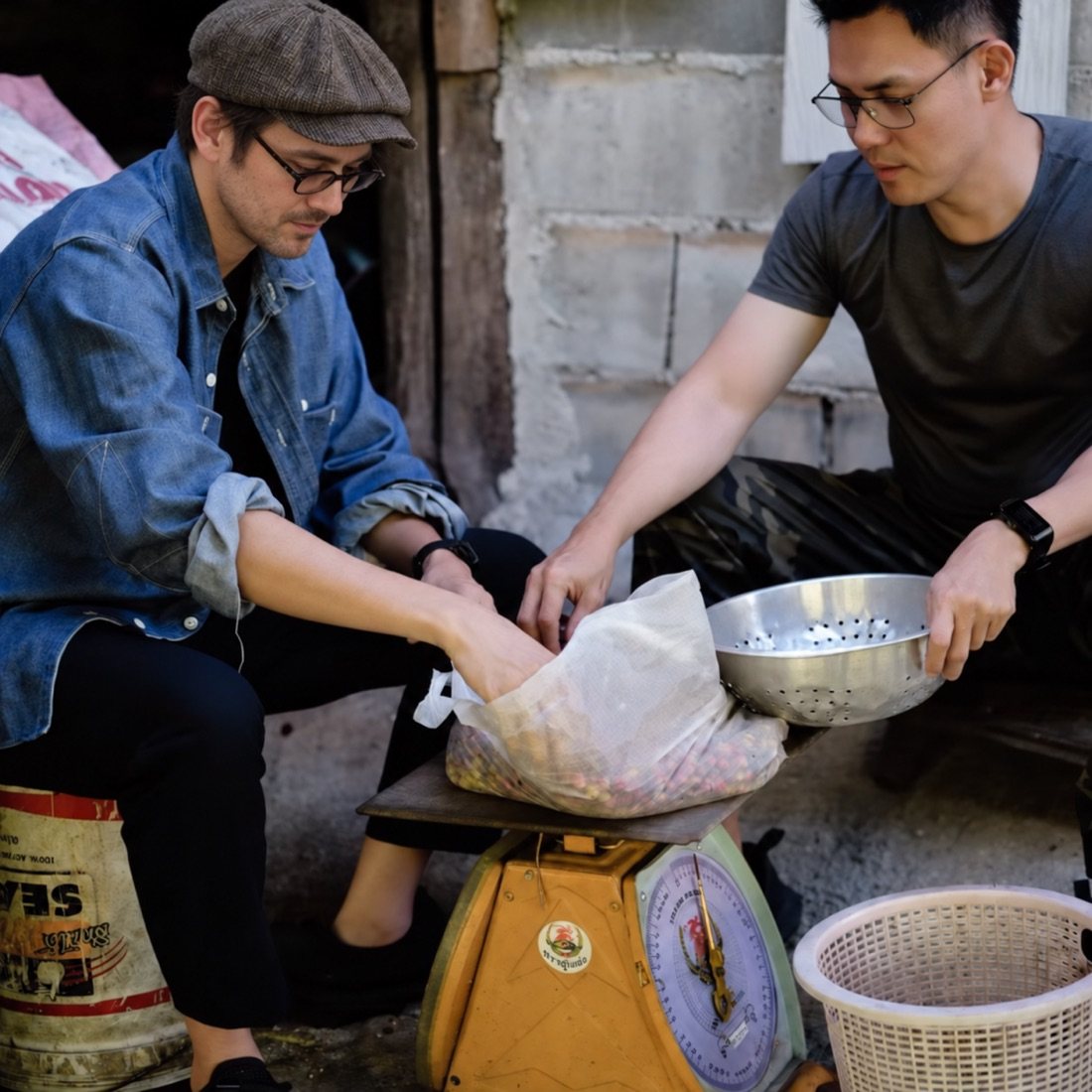
With Thai growers: shared processing knowledge, honest feedback on every lot, and a price intended to make keeping the forest standing worth more than clearing it. We tune profile and blend rather than buy finished product.
With the chefs and mixologists who taste for a living. They tell us what a cup has to do to earn a place on a menu; we build the coffee back from that answer — one kitchen, one bar, one table at a time.
Local work. Global taste.
Where it is judged
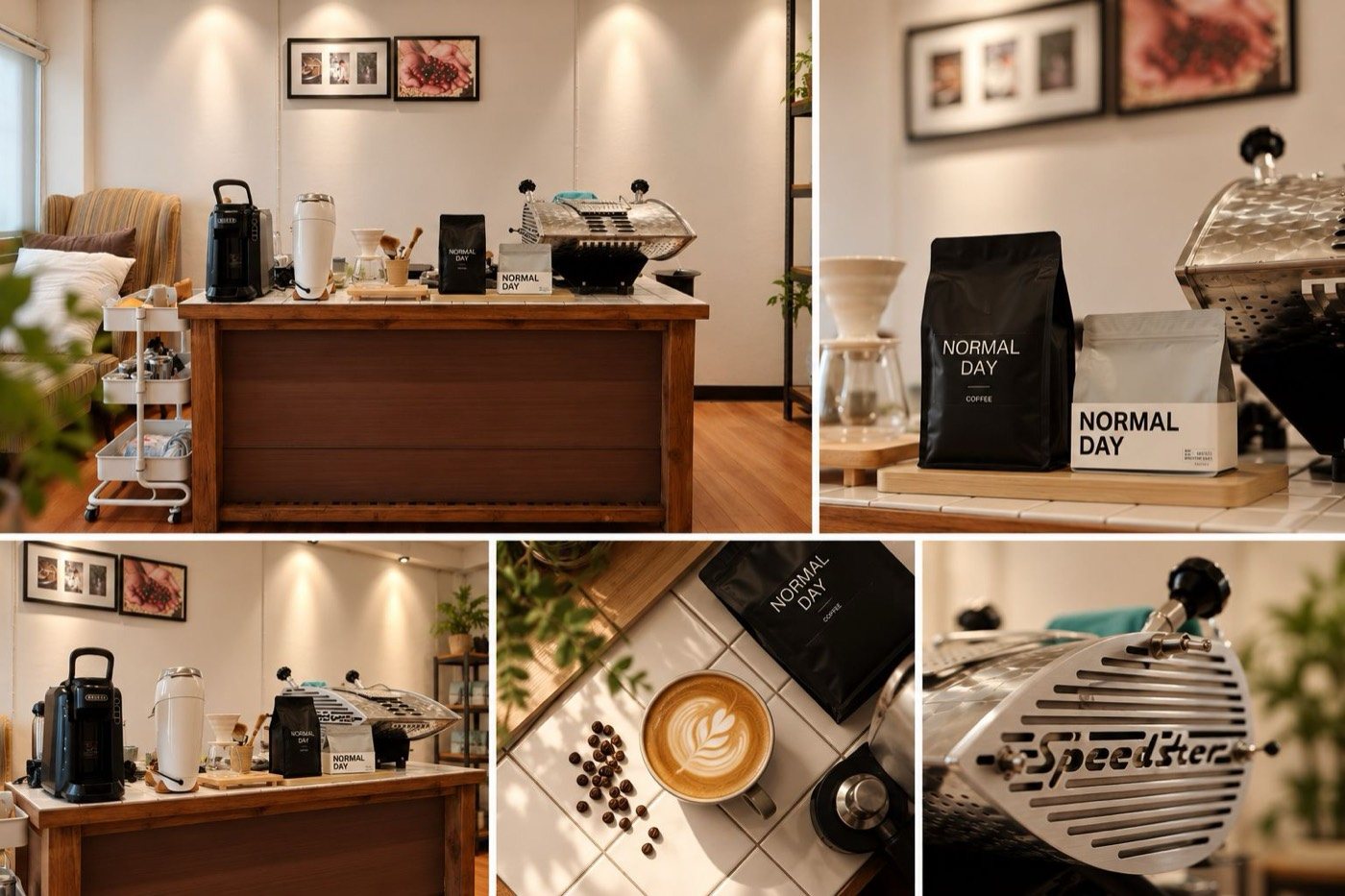
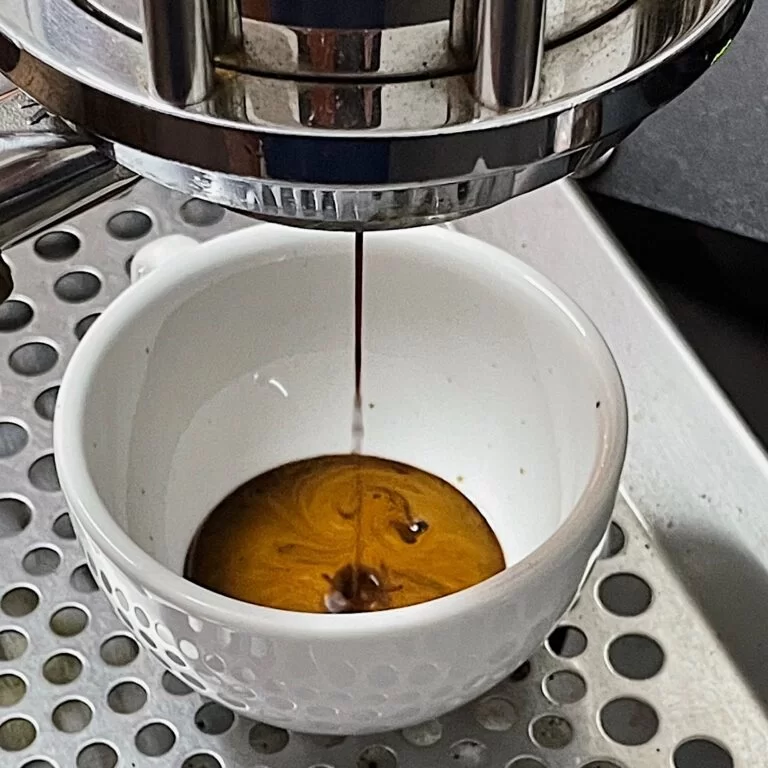
Every profile is pulled here before it is pulled anywhere else. A blend that does not survive our own bar does not reach yours.
Working with us
A shared Thai base, profiles developed for each outlet, and packaging that carries your brand.
Begin with an on-site tasting, at no cost and with no commitment. Then define the profiles, quantities and service plan together.